
Ingrown toenails, corns, bunions and painful nails: You don’t have to put up with it
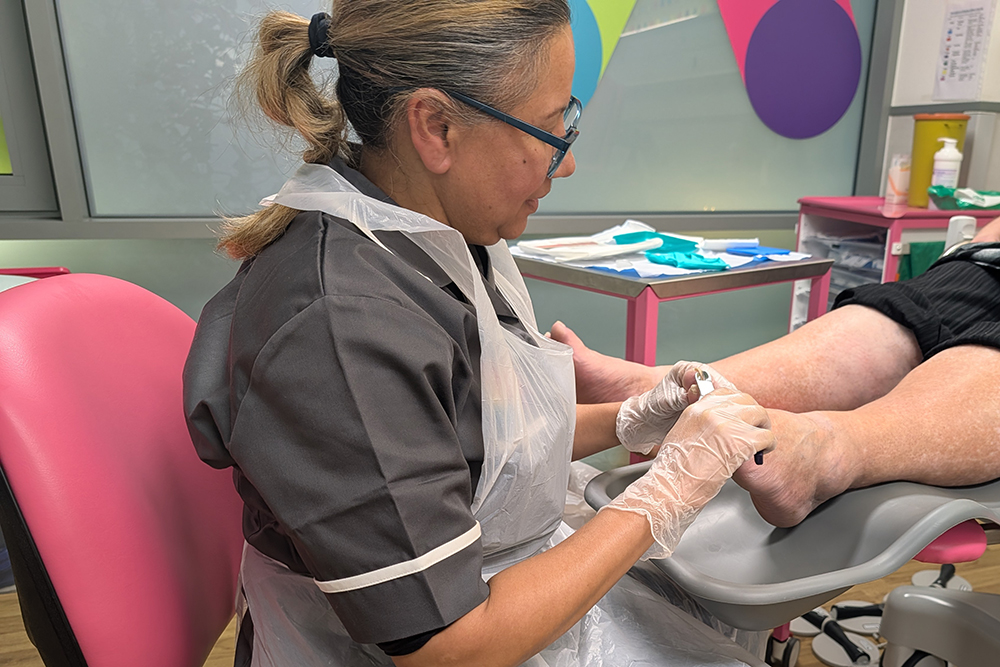
What routine podiatry actually involves
A routine podiatry appointment is far more than a nail tidy. A skilled podiatrist assesses the overall condition of your feet – skin, nails, circulation and sensation – and provides treatment that makes a real difference to daily comfort. This includes safe removal of corns and calluses, care for thickened or fungal nails, treatment for verrucas, skin care advice, and identifying anything that warrants further investigation.
Ingrown toenails: a reliable solution exists
An ingrown toenail occurs when the edge of the nail grows into the surrounding skin, causing pain, redness and sometimes infection. For mild cases, conservative treatment can resolve the problem. For recurring, chronically painful, or infected nails, nail surgery offers a lasting solution. Carried out under local anaesthetic, the procedure removes the problematic portion of the nail and, where appropriate, treats the nail matrix to prevent regrowth. Most patients are back to normal within a day or two.
Bunions: what you need to know
A bunion (hallux valgus) is a bony prominence that develops at the base of the big toe, causing the toe to angle toward the others. Bunions can be hereditary and can be made worse by tight or narrow footwear. While surgery is sometimes the eventual solution for severe cases, a podiatrist can significantly reduce pain, slow progression and improve function through padding and footwear guidance.
Why professional care is safer than DIY
Many people manage their feet at home – with corn plasters, nail scissors or tools not designed for the purpose. For anyone with diabetes, reduced circulation or fragile skin, home treatment carries a real risk of injury or infection. And even for otherwise healthy people, recurring problems – corns that keep coming back, nails that won’t behave – are often a sign that something about the mechanics or footwear needs addressing.
Footwear and your foot health
The wrong footwear is one of the most common contributors to the conditions we treat. Shoes that are too narrow, too flat, too high-heeled or simply worn out can cause or worsen corns, bunions, heel pain and nail problems. Part of our role is to help you understand what works for your feet specifically – guidance based on your foot type and what you’re asking your feet to do.
The confidence factor
Foot problems – particularly visible ones like bunions, thickened nails or corns – can affect confidence and self-image in ways that people rarely talk about. Avoiding the pool, hiding your feet in summer, and turning down activities because of discomfort or embarrassment. We take all of this seriously. The improvements we see in confidence and quality of life after treatment are as meaningful to us as the clinical outcomes.
Don’t keep putting it off. Routine podiatry is available for private patients at Accelerate CIC. Book your initial consultation – call 020 3819 6022 or email hello@acceleratecic.com.