
Understanding the Difference – Lipoedema vs Lymphoedema vs Venous Disease
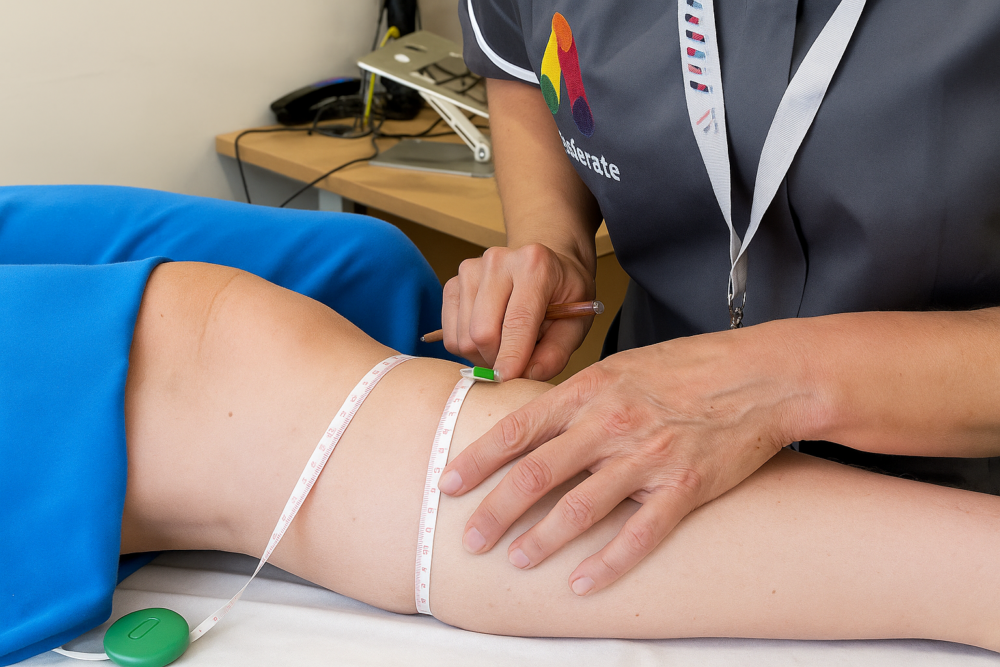
Swollen, heavy legs. Discomfort that doesn’t go away. Changes in shape that don’t seem to respond to diet or exercise. If this sounds familiar, you’re not alone – and you may be wondering what’s really behind it.
Lipeodema, lymphoedema and chronic venous disease are three of the most common causes of lower-limb swelling, but they can be confused with another condition. Understanding their differences is essential for getting the right diagnosis – and the right treatment.

At Accelerate CIC, our clinical teams specialise in assessing and managing all three. Here’s how we tell them apart.
Lipoedema – A Distinct Pattern of Painful Fat Distribution
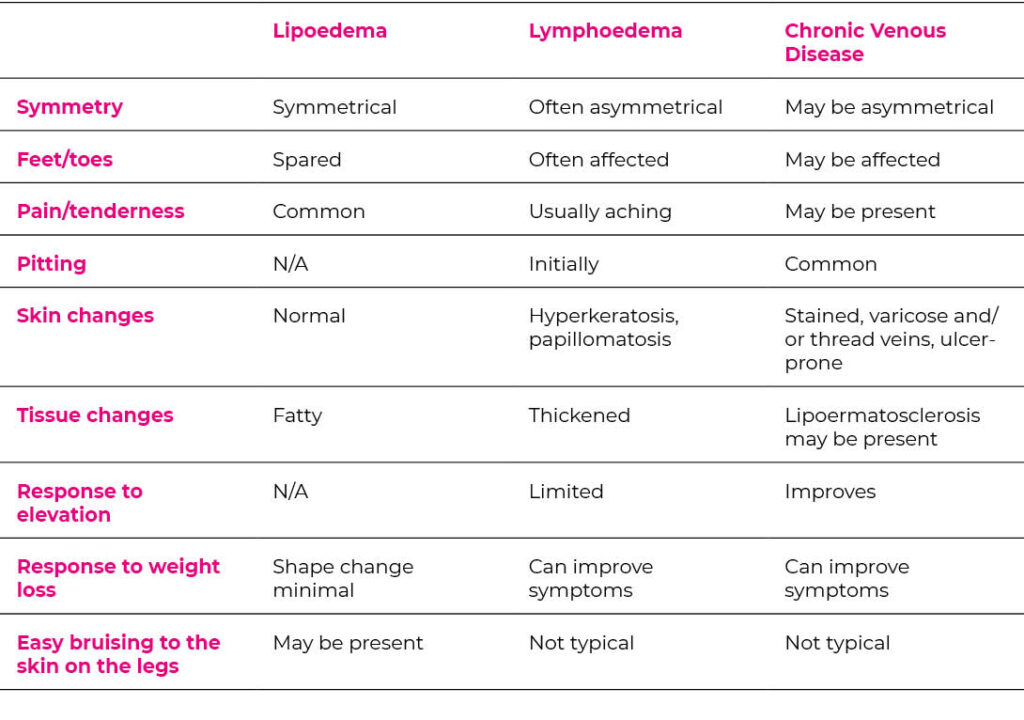
Lipoedema is a long-term condition involving symmetrical enlargement of the legs or arms due to abnormal fat tissue.
Key features include:
- Pain, tenderness to touch and easy bruising
- Symmetrical enlargement – both legs or both arms
- Feet and hands usually unaffected
- Loose, fatty texture and a “jodphur” leg shape
- Hooded knees, fat pads at the knees and/or ankles
Many people with lipoedema report heaviness, discomfort, and frustration that weight loss doesn’t change their body shape. Hormonal changes -puberty, pregnancy, or menopause – can make symptoms worse.
Lipoedema can exist alongside lymphoedema or venous disease, which is why accurate assessment by a specialist team is so important.
Lymphoedema – When the Lymphatic System Fails
Lymphoedema occurs when the body’s lymphatic system (which drains excess fluid) doesn’t function properly, leading to fluid build-up in the tissues.
It can be primary (present from birth due to faulty lymphatic development) or secondary (caused by surgery, radiotherapy, trauma, or infection).
Typical features include:
- Swelling that pits when pressed, especially in early stages
- Involvement of the feet or hands (or any body part)
- Skin thickening over time, with increased infection risk (cellulitis)
- Heaviness or aching
Unlike lipoedema, lymphoedema usually starts distally – in the feet or hands – and may be asymmetrical (one leg or arm worse than the other). Left untreated, it can lead to skin changes, fibrosis (hardening of tissue) and recurrent infections.
Chronic Venous Disease – When Veins Can’t Cope
Chronic venous disease (CVD) arises when the veins in your legs struggle to send blood back to the heart. This can cause pooling of blood, leading to swelling, skin changes, and discomfort.
Typical signs include:
- Swelling that improves with elevation
- Visible varicose veins or spider veins
- Brown discolouration (haemosiderin staining)
- Narrowing of the lower calf causing enlargement of the upper calf (lipodermatosclerosis)
- Ulcers or wounds in more advanced cases
- Leg aching or heaviness that worsens later in the day
Venous disease can exist alone or alongside lymphoedema – and both can overlap with lipoedema, making expert assessment vital.
Why Getting It Right Matters
Each of these conditions needs a different approach:
- Lipoedema management focuses on compression that supports shape and comfort, tailored exercise, and self-management.
- Lymphoedema management targets fluid control, skin protection, and infection prevention.
- Venous disease may involve vascular assessment and sometimes surgical intervention, compression, and elevation
Misdiagnosis can delay effective treatment, prolong discomfort, and increase risk of complications such as cellulitis or ulceration.
How Accelerate CIC Helps
At Accelerate CIC, our team brings together specialists in lymphoedema, lipoedema, vascular care, podiatry, and biomechanics. This multidisciplinary approach ensures that your diagnosis is precise – and your care plan reflects your specific needs.
We also work closely with the British Lymphology Society, Lipoedema UK, Lymph United, and the Legs Matter coalition, helping to improve awareness and standards of care across the UK.
If you’ve been told “it’s just weight” or if swelling, pain, or bruising continue despite lifestyle changes, don’t settle for uncertainty. A structured, expert-led assessment can uncover the real cause and start you on a path toward relief.