
Lipoedema – Your Questions Answered
When you’re first told you have lipoedema, it’s natural to have questions.
How do you know for sure? What treatments help? And why does it seem so misunderstood?
At Accelerate Health CIC, we hear these questions every day. Our clinicians have compiled answers to the most common queries we receive – based on the latest UK and international guidance – so you can make sense of your symptoms and take your next steps with confidence.
1. Is lipoedema the same as lymphoedema?
No – although the two conditions can look similar, they are distinct.
- Lipoedema is a symmetrical enlargement of the limbs caused by abnormal, tender and possibly bruise-prone fat tissue.
- Lymphoedema occurs when the lymphatic system fails, leading to swelling, skin and tissue changes and a predisposition to infection. One key difference is that lipoedema usually spares the hands and feet whereas lymphoedema often involves the feet or hands.
Some people have both conditions, which is why assessment by a specialist clinic is essential.
2. Can weight loss cure lipoedema?
No – weight loss cannot “cure” lipoedema.
While maintaining a healthy weight supports general wellbeing and reduces pressure on joints, it can also help reduce the burden of symptoms in lipoedema. In lipoedema fat behaves differently from ordinary fat. Even after significant weight loss, many people find their limb shape remains disproportionate.
That’s not failure – it’s biology.
At Accelerate, we help you focus on function, comfort, and confidence, not unrealistic body targets.
Your plan may include weight management support, but this will always be part of a personalised treatment plan, which may also include compression, movement, skin care, and, if needed, discussions about surgical options such as liposuction in highly selected cases.
3. How is lipoedema diagnosed? Do I need scans?
There’s no single test for lipoedema. Diagnosis is based upon clinical assessment and physical examination, alongside your symptoms and history.
A specialist clinician will:
- Review your medical and family history
- Examine your limbs for characteristic features
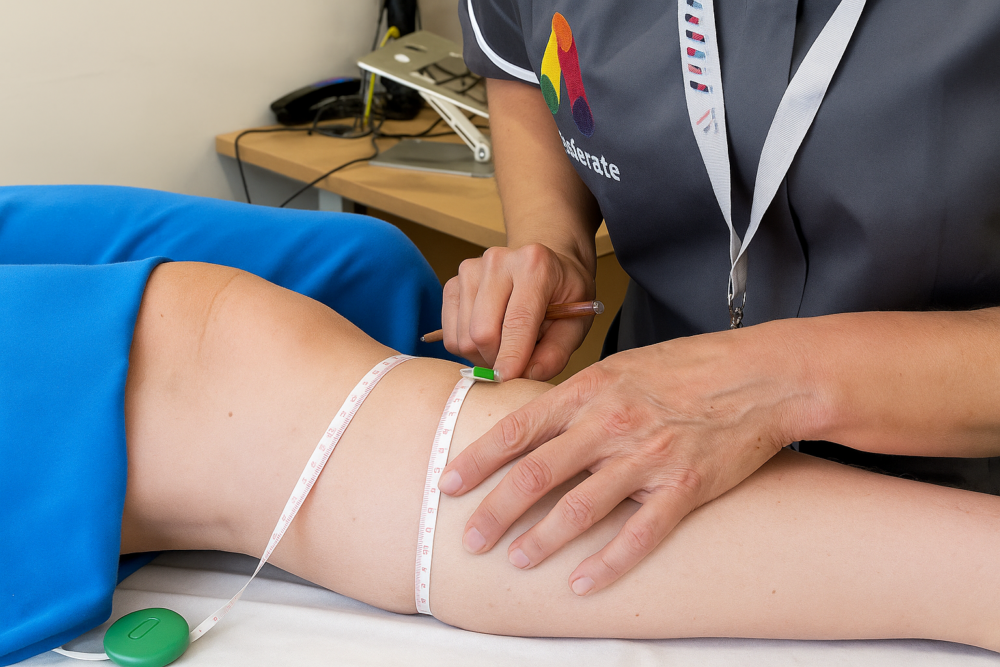
- Measure circumference at landmark points
- Rule out other causes such as lymphoedema or venous disease
Scans (e.g., ultrasound or lymphoscintigraphy) are usually not required to confirm lipoedema, though they may be used to exclude other conditions.
At Accelerate, we also use moisture meter readings to detect any co-existing lymphatic changes.
4. What compression is best for lipoedema?
There’s no “one-size-fits-all” answer – the right compression is the one you can wear comfortably and consistently.
- Lipoedema often requires flat-knit garments tailored to the limb’s shape, as they provide structured support and contouring.
- Other options include adjustable wraps or sports-style compression if they offer comfort and function.
The key is a professional fitting and ongoing review to make sure garments remain effective as your condition or comfort levels change.
5. When is liposuction considered – and is it available on the NHS?
Liposuction for lipoedema is not widely available on the NHS and should only be considered after conservative management (compression, movement, pain and skin care) has been optimised.
The NICE guidance (IPG721) states that evidence remains limited and surgery should only take place within robust governance frameworks.
Accelerate’s experts can discuss surgical options with you, help you understand realistic expectations, and ensure your care before and after surgery is safe and coordinated.
6. What makes lipoedema worse?
Lipoedema symptoms may flare with:
- Hormonal changes (e.g. puberty, pregnancy, menopause)
- Heat and humidity
- Prolonged standing or walking
- Inadequate compression or poorly fitting garments
- Weight gain that increases joint strain and fatigue
Monitoring patterns over time helps tailor your management plan and spot what triggers symptom changes for you.
7. When should I seek urgent medical help?
Lipoedema itself isn’t dangerous, but sudden changes may signal something else.
You should seek immediate medical advice if you develop:
- Rapid swelling in one leg
- Redness, heat, or pain with fever (possible cellulitis)
- Shortness of breath or chest pain (possible DVT or embolism)
If in doubt – always get checked.
8. Can I still exercise with lipoedema?
Absolutely – and it’s encouraged.
Gentle, regular movement supports lymph flow, joint health, and mental well-being.
Initially, a focus on low-impact activity may be needed to increase your tolerance, such as:
- Swimming or pool walking
- Cycling
- Yoga or Pilates
- Walking at your own pace
Our team can help design a safe, manageable exercise plan that works with your body – not against it.
9. What kind of specialist should I see?
You should see a clinician experienced in lipoedema and lymphoedema management – ideally within a multidisciplinary team that includes:
- Specialist nurses
- Podiatrists or biomechanics experts
- Compression specialists
Accelerate Health CIC offers this combined expertise under one roof, providing continuity between diagnosis, garment planning, and follow-up support.
You’re Not Alone
Many people live with lipoedema for years before getting a diagnosis. That delay is not your fault – but your life can change once you’re in the right hands.
Accelerate Health CIC works alongside leading UK and international organisations, including Lipoedema UK, the British Lymphology Society, Lymphoedema United, Lymphoedema Support Network and Lipoedema UK to improve awareness and care.
If you’re ready to understand your symptoms and feel supported in managing them, we’re here to help.